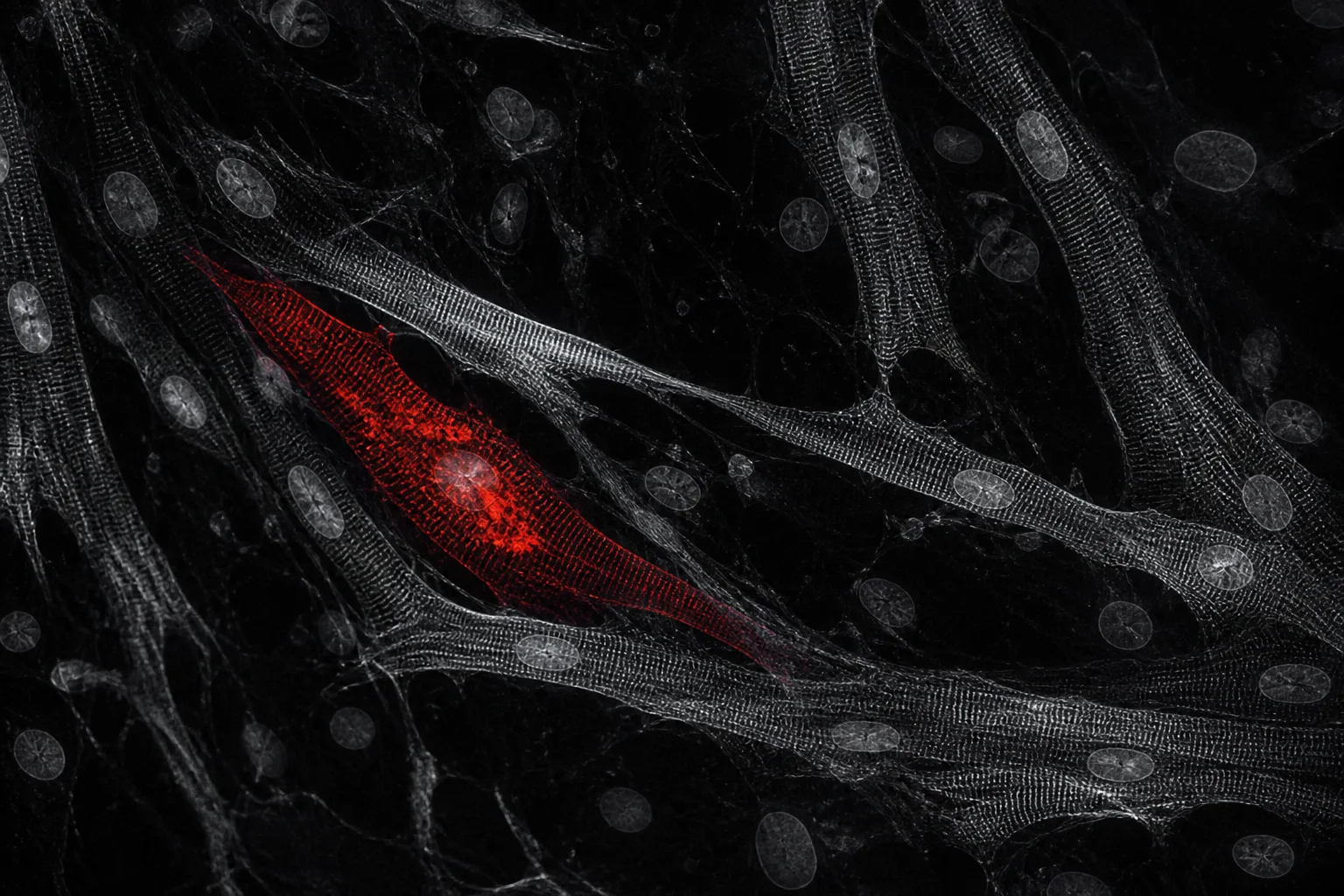
 Cardiovascular disease
A reproducible evidence stack for inherited cardiomyopathy
From heterogeneous variant annotations to a testable cardiomyocyte-state hypothesis.
View case study
We connect genomic variation to cell states, phenotypes, and testable therapeutic hypotheses.
We build evidence that can survive a new dataset, a changed parameter, and a skeptical reader.
Connect variant consequence to structured clinical observations without collapsing uncertainty.
Locate disease mechanisms in the cell types and states where they become biologically coherent.
Treat phenotype representation as a tested, versioned part of the analytical model.
Translate convergent evidence into falsifiable intervention logic and experimental priorities.

Testing whether distinct rare-disease genes converge on shared developmental programs.
Every REELD hypothesis carries its evidence path, competing explanations, and conditions for failure.
See our methodsSee how the framework behaves when the evidence is incomplete, heterogeneous, and sensitive to context.
Cardiovascular diseaseFrom heterogeneous variant annotations to a testable cardiomyocyte-state hypothesis.
View case studyNeurodevelopmentUsing cortical atlases to locate when a phenotype-linked gene module is most coherent.
View case studyOur editorials examine the assumptions that decide whether a computational result can travel.
All editorialsA mechanism that disappears under a reasonable alternate pipeline is not ready to anchor a therapeutic hypothesis.
18 min readTerms, ancestors, and information content shape the answer. They belong in the methods, not in a footnote.
16 min readSecondary analysis is not second-class science, but it must respect cohort design, provenance, and consent boundaries.
19 min readOur analyses draw on our own research and findings, alongside engagement with investigators and scholarship at leading research campuses.
How we collaborate